What if the CNESST showed up at your job site tomorrow morning?
In that situation, a surprise CNESST visit can quickly become a stressful moment, especially if certain items have not been checked in a while.
Keep in mind that an inspection does not necessarily stem from a complaint or an accident. As part of the CNESST’s mandate to enforce the Act respecting occupational health and safety and its regulations, an inspection can also be preventive.
An inspector may show up with or without an appointment, enter the site, ask questions, review certain documents and examine work methods. If a situation poses a danger to workers’ health or safety, the inspector can even require immediate corrective measures or order work to stop.
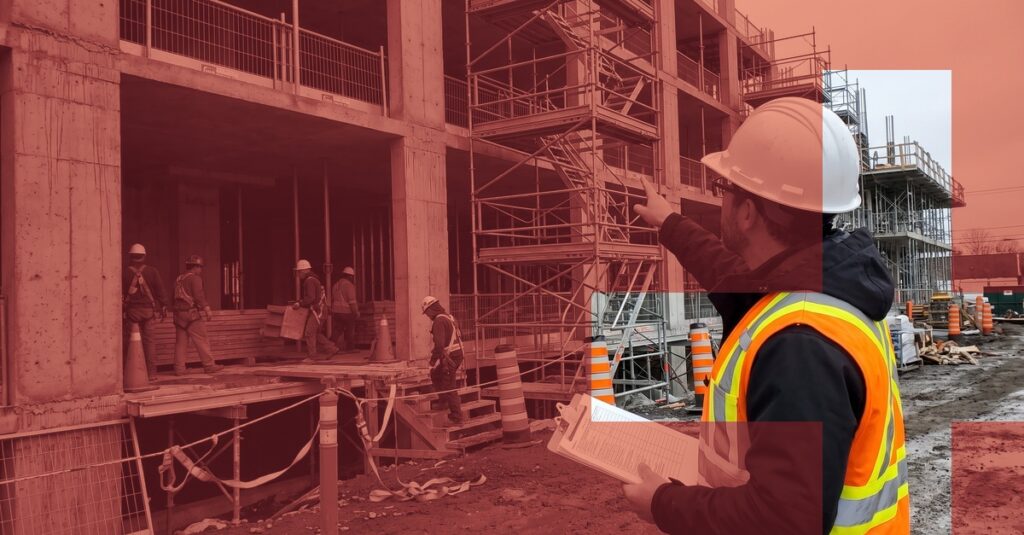
The best preparation does not happen the day before an inspection. It is built through everyday habits: making sure guardrails are properly in place, that harnesses are used when required, that site access is clear, that excavations are secured, that records and registers are available, and that workers know who to turn to when a risky situation arises.
What an inspector will look at first on your site
- Fall protection;
- Scaffolding and work platforms;
- Excavations and trenches;
- Personal protective equipment;
- Work near energy sources;
- Compliance with the requirements of the Safety Code for the construction industry.
Compliance is not limited to what is visible, however. Since the occupational health and safety reform, the inspector can also review the prevention mechanisms that apply to the site, meaning your prevention programs, site committee, and health and safety representative or coordinator, where required.
Put differently, the companies that come through this kind of visit best are not the ones that react at the last minute. They are the ones that have already built prevention into their daily operations and into the planning of the work itself.
If an inspector arrived tomorrow, would you be ready?
The purpose of an inspection remains prevention. A surprise visit should confirm the good practices already in place, rather than reveal what should have been corrected earlier.
Stay safe on your sites!